Pages

Friday, July 22, 2022

Running in the News... Five for Friday

The summers featuring Olympic Games or World Championships are some of the most exciting for Track & Field fans. I've been glued to my television just about every night this past week, watching the World Championships at the famed (and newly-renovated) Hayward Field in Euguene, Oregon.

With that in mind, this week's selection of Top 5 Running Stories is, by default, World Championships-heavy, but not exclusively. I tried to showcase some of the stories behind the scenes that piqued my interest.

_________________________________________________________________________________

1.

Syndney McLaughlin's youth track coach knew what was coming

Late tonight we all saw Syndney McLaughlin not only break her world record in the 400H, but SMASH it to smithereens. As a bonus, she's also now a World Champion. This article from The New York Times is an interesting Q&A with one of McLaughlin's earliest coaches. A woman who saw her potential from the start.

[Doug Mills, The New York Times]

Lisa Morgan, ...A five-time U.S.A. Track & Field junior national team coach, was also a longtime coach at Columbia High School in Maplewood, N.J. McLaughlin, who grew up in central New Jersey and ran at Union Catholic High School, was a friendly rival and then ran for Morgan on multiple junior national teams.

What was the most important thing you instilled in her?

Believing in who she was. The confidence. Step on that line and believe in you and use your God-given talent to do what you are supposed to do. That is what I instilled in her. You are competing against the world, across the globe in another country and you are competing for your country. You have to ste up. Your team is counting on you to bring back gold for your country.

________________________________________________________________________________
2.

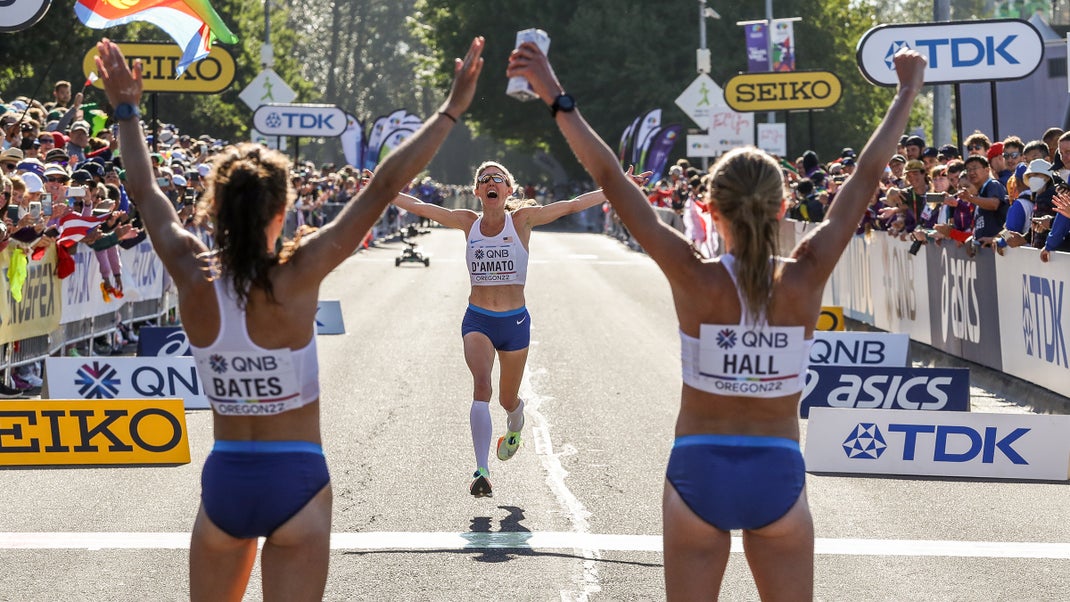
Writer Erin Strout gets the inside scoop, for Women's Running magazine, on a spectacular moment captured at the end of the women's World Championships Marathon. 


[photo credit: Kevin Morris]

________________________________________

3.

And speaking of interesting moments captured at the World Championships... Unless you're REALLY not a track & field fan, you've no doubt heard (or, more likely, seen) the moment when a television videographer stepped right into the path of the men's steeplechase final. I'm still waiting to find/read an in-depth interview with this man to see just what he was thinking (or not thinking) when this happened.


Whoops.
Credit...
[Lucy Nicholson/Reuters]

Have you ever experienced obstacles in a race?

________________________________________
4.

Opinion: The Day the Shoes Blotted Out the Sun


Oiselle CEO Sally Bergesen asks: Who are we short-changing when we choose to ignore the shoe tech dilemma?

[Sound off in comments below, please.]

______________________________________________________

5.


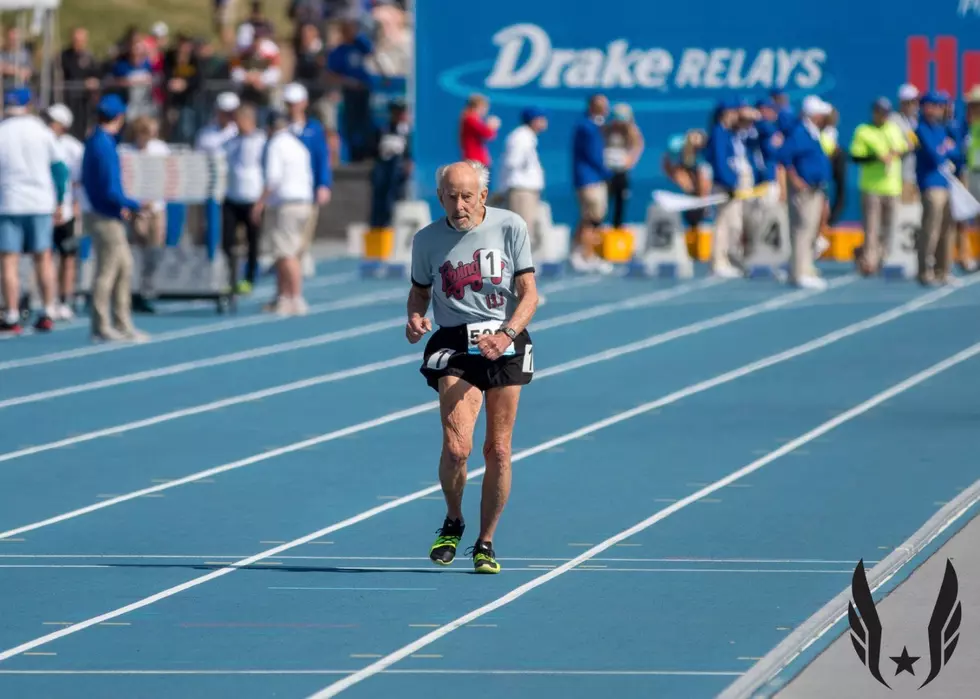
Defying claims that plant-based diets lack for protein or hinder athletic performance, vegan athletes worldwide have proved otherwise, including some of the most accomplished competitors in the world. The latest to prove the naysayers wrong: Vegan runner Mike Fremont, who turned 100 years old in February and celebrated with a run around Vero Beach in Florida.

Fremont adopted a vegan diet at the age of 69 after receiving a daunting cancer diagnosis. He turned down what his doctors told him was life-saving surgery in favor of switching to a whole food plant-based diet. Now, Fremont, the oldest known vegan runner, holds the marathon distance world records for single-year age groups of 88 and 90.


Make sure to keep scrolling this article to read mini-profiles of surfers, professional tennis players, NFL & NBA players, etc. all of whom are THRIVING on a vegan diet, including ultra-runners Scott Jurek & Matt Frazier and sprinters Morgan Mitchell & Elijah Hall.


Saturday, July 16, 2022

Is Walking the new Running?

Ever since I adopted the world's cutest Labradinger (that's a Labrador/English Springer Spaniel mix for the uninitiated) I've found myself doing longer walks and shorter runs. Next month (August 6) will mark Drake's Eight Year Adoption Anniversary or "Gotcha Day."

His Royal Highness, Sir Barks-A-Lot [aka Drake]

Don't get me wrong, Drake was running 13 miles before he was a year old. I was a little leery about running that much with him when he was so young, but he had (and still has) seemingly boundless energy and is whip-smart. He always lets me know if/when he's had enough on any given run (or walk, for that matter). A number of trainers, vets and vet techs, upon meeting him, have said, "Run him. Run him hard!" He needs the mental stimulation and loves the exercise.

That said, he is slowing down a bit. Not much, but enough that our runs have been shortened. But he'll still willingly do a 2-hour, up-tempo walk in all kinds of weather.

I've been a fan of walking-as-transportation since my earliest days at the University of Minnesota. Back then, it was out of necessity – I didn't have a car during college. But I learned to embrace the concept of walking for both exercise AND as transportation for errands, etc. It was a great habit to start early-ish in life and has served me well for many years.

One of the (many) reasons I wanted to adopt a dog was so he would do long walks with me. I really lucked out. This little dude can walk a LONG distance and still have energy left to bark at cats, motorcycles and skateboards. He also loves to "flirt" with everyone. It's fun to have the world's cutest dog, because all he has to do is look directly at people and I immediately see their face melt into a smile. Male, female, young and old - they're all VERY susceptible to this little guy's charms.

_________________________________________________________________________________

Creative ways to walk smarter...

This article from The New York Times, 6 Ways to Level Up Your Daily Walk, was part of the publication's "Why Not Try" columns. It offers some good advice for creative and well-tested ways to make your walks even more productive.

Any writer who can work the phrase "Embrace the Fartlek" (#6 on the "6 Ways...") into a general-audience article, is a-okay with me. (I'm looking at you, Emily Pennington.) As anyone who has coached high school athletes can attest, the first time you say the term out loud, be sure to pause and wait for the inevitable laughs and smart-aleck comments.

Embrace the fartlek.

Swedish for "speed play," fartlek workouts use a type of interval training that involved a series of high-intensity bursts with recovery periods between them. The beauty of the fartlek is that, unlike in traditional high-intensity interval training workouts, walkers or runners don't have to glue themselves to a watch or a fitness tracker to boost their muscular endurance. Just amp up your gait to a light jog or a power walk for a short stretch to get your heart rate up, slow back down until you feel recovered and repeat.

Have you ever used Fartleks in your workouts? I can tell you, doing them as a team, on a track, is the MOST fun way to enjoy this workout. I challenge anyone who thinks overwise to convince me why that's NOT true. [Feel free to try in the comments below.]

________________________________________________________________________________

10,000 steps/day - Marketing hype? Scientific fact?

Speaking of The New York Times and Walking... 

Do We Really Need to Take 10,000 Steps a Day for Our Health?

The advice that we take 10,000 steps a day is more a marketing accident than based on science. Taking far fewer may have notable benefits.

According to Dr. I-Min Lee, a professor of epidemiology at the Harvard T.H. Chan School of Public Health and an expert on step counts and health, the 10,000-steps target became popular in Japan in the 1960s. A clock maker, hoping to capitalize on interest in fitness after the 1964 Tokyo Olympic Games, mass-produced a pedometer with a name that, when written in Japanese characters, resembled a walking man. It also translated as "10,000-steps meter," creating a walking aim that, through the decades, somehow became embedded in our global consciousness – and fitness trackers.

But today's best science suggests we do not need to take 10,000 steps a day, which is about five miles, for the sake of our health or longevity.

What do you think? Is 10,000 steps/day a realistic goal? [Comments are welcome.]
___________________________________________________________________________

Friday, July 15, 2022

Running in the News... Five for Friday

It's been WAY too long since I've posted one of my "Five for Friday" columns (or any TJ's Turf blogs, for that matter). With a number of interesting articles making the news this week, it was the perfect time to reinstate this routine.

The first article came across my desk just as I was trying to decide on a fifth notable article. The Jim Thorpe news quickly made its way to the top of this list.

Before we all hunker down for the weekend to watch the World Track & Field Championships, take a look at what I found remarkable in this week's running news.


1.

Jim Thorpe, first Native American to win an Olympic gold medal for the U.S. 

Just today the Associated Press announced that Jim Thorpe has been reinstated as the sole winner of the 1912 Olympic pentathlon & decathlon – nearly 100 years after being stripped of those gold medals for violations of strict amateurism rules of the time. Read more about it here: 

Jim Thorpe reinstated as sole winner for 1912 Olympic golds

And in this article in The New York Times:

Jim Thorpe Is Restores as Sole Sinner of 1912 Olympic Gold Medals

Thorpe, to some, remains the greatest all-around athlete ever. He was voted as the Associated Press' Athlete of the Half Century in a poll in 1950.

(AP Photo, File)
___________________________________________________________________

Friday, November 8, 2013

Running in the News... Five for Friday

This was a fun week in running news.
  • Find out what it's really like to be an ultramarathoner and what motivated Alex Nemet to complete seven races of 100 miles (or more) in just six months.
  • A documentary about the amazing Girls on Run organization (Chicago chapter) won an Emmy.
  • A Boston Marathon bombing victim gets to wear her favorite high heels again!
  • Plus a couple of studies on exercise.


Alex Nemet of Cleveland calls his ultramarathon races “unbelievable therapy sessions.”

His story is told in "Ultramarathon Runner Embraces Physical and Mental Challenge."

But pushing his body and his mind to their limits, tearing himself down to the core, is what Nemet craves. It is in this state that he finds emotional healing.

[Please click link above to read the entire article.]


I have a remarkable young cousin who is smart, funny, kind and athletic. She's currently a college student and cross country runner. I need to send this article ("How Intense Study May Harm Our Workouts") to her and see if she's experienced the phenomenon explored in this study.

Tire your brain and your body may follow, a remarkable new study of mental fatigue finds. Strenuous mental exertion may lessen endurance and lead to shortened workouts, even if, in strict physiological terms, your body still has plenty of energy reserves.

...

In simpler terms, exercise simply feels harder when your brain is tired, so you quit earlier, although objectively, your muscles are still somewhat fresh.

[Please click link above to read the entire article.]


Sarah Moshman and Dana Michelle Cook, owners of Heartfelt Productions, won an Emmy [Outstanding Achievement for Human Interest Programming - Program/Special/Series/Feature/Segment (Award to the Producer/Host/Reporter)] at this month's 55th Annual Chicago/Midwest Emmy Awards Ceremony.

Their film "Growing Up Strong: Girls on the Run," showcases the Chicago Chapter of Girls on the Run.

This short documentary shines a spotlight on Girls on the Run – Chicago, a non-profit program that inspires girls to be joyful, healthy and confident using a fun, experience-based curriculum that creatively integrates running. Girls on the Run – Chicago serves over 6,000 girls annually through their after school initiatives. The documentary follows the experiences of these girls as they prepare for a 5K event at Soldier Field.


This headline says it all: "Marathon bomb victim gets new leg for high heels."

Heather Abbott rarely wore flats before she became one of the many people to lose a leg in the Boston Marathon bombings. She calls herself a "professional heel-wearer" and preferred heels that reached the towering height of 4 inches.              

On Thursday, she showed off a new prosthetic that will help her reclaim a little bit of her personal style: a "high-definition" realistic silicone leg that can be worn with high heels.

[Please click link above to read the entire article.]


And then there's this gem:

"Exercise in a Pill? The Search Continues."

Ummm.... No thanks. I'll continue to sweat and work my heart and lungs the old-fashioned way.

Two newly published studies investigate the enticing possibility that we might one day be able to gain the benefits of exercise by downing a pill, rather than by actually sweating.

Not all that enticing.

But while some of the research holds out promise for an effective workout pill, there remains the question of whether such a move is wise.

Duh?

And, again, thanks but no thanks!

[Please click link above to read the entire article.]

Kenyan Distance Domination

Leading up to last weekend's New York City Marathon there was great coverage of the elite athletes, as always. But this year's attention focused heavily on Kenyans, with good reason, as you will read.


This NPR piece – "How One Kenyan Tribe Produces The World's Best Runners," looks specifically at the (relatively small) Kalenjin tribe's domination in world long-distance racing.

Scientists and sports gurus have proposed all sorts of explanations over the years for Kalenjin prowess on the track: from their high-starch diet, to the altitude, to socioeconomics.

All those factors are important, but none of them explain why this particular tribe is so dominant. That left Epstein when he was writing his book exploring a more controversial line of inquiry: Is there something genetically different about the Kalenjin that makes them superior runners?

[Please click on link above to read/listen to entire report.]


This article in The Wall Street Journal – "Tegla Loroupe's '94 NYC Marathon Win Reverberated in Africa: The Kenyan Woman's Victory Inspired Others to Follow Her, and They Have," looks at how the breakthrough 1994 NYC Marathon win for Loroupe, the first African woman to win a major marathon, was just the kick-off to what would become the African women's turn to dominate distance running on an international scale.

Since Loroupe's victory, Kenyan women have won five of the intervening New York marathons and now own six world records in distance running.

This really interesting article explores some of Loroupe's upbringing and the training that led to her '94 victory.

[Please click on the article link above to read the entire story.]


And finally, this Sports Illustrated article – "Wesley Korir running for a cause -- and eventually president of Kenya," examines the political strife and violence in Korir's home country that led to his determination in distance running, and motivates him to help bring about real political change in his country.

"I want to use my life experience of how I moved from poverty to prosperity," he said, "and I want to use the same thing -- education and talent, empowerment, talent development -- to make people really use what they have, what God has given them, to better themselves."

...

"I always tell people aim for the moon," he said, "you miss it, you land at the stars."

[Please click on the article link above to read the entire story.]

Friday, November 1, 2013

Running in the News...

Five for Friday

Here are five articles I found especially noteworthy from this week's running-related media coverage. Please let me know what you think!


This very interesting article in The New York Times describes a group of runners training for this weekend's New York City Marathon.

Set for Marathon, Ex-Addicts Find Their Way profiles these addict/runners who live, work and train in Coriano, Italy at San Patrignano, one of the largest drug rehabilitation centers in Europe.

“We are broken vases that have been glued together again,” Floriddia said. “But if we can work and live in a healthy environment, we won’t break again.”
 
Tucked in the northern hills of Italy, San Patrignano is not a typical training ground for marathoners. It has 1,300 residents at its main facility, which doubles as a small farming community. The addicts submit to a four-year rehabilitation program in which they must cultivate their food, clean their rooms and undertake tasks like making cheese, raising pigs and cows, and producing wine.

[Please click on the article link above to read the entire story.]


I enjoyed reading about an extraordinary northern Arizona high school cross country team in this Associated Press article, Hopi High in Ariz. becomes cross-country standout.

The group of boys head out toward the mesa, setting their feet upon dirt trails that are lined with scrub brush and corn fields. It's the same earth that their Hopi ancestors would tread as they ran in prayer for rain, prosperity and all of mankind.
   
For these boys, the drive is as much about the competitive spirit as the enduring spirit of their culture.    Hopi High School, where they are students, has earned 23 state cross-country titles in a row, and according to its coach, is one of three schools in the country to earn a perfect score at a state meet.    No high school in the nation is as dominant when it comes to winning consecutive championships, and the team wants to make sure the streak continues.

The pressure this team feels is not just for their upcoming regional and state meets, but also from their tribe's long-standing running success.

In the Hopi's story of running glory, there is inspiration that comes from a Hopi man who competed at the 1908 Olympics and earned a silver medal in 1912. The federal government shipped Louis Tewanima off to boarding school, and he rose to become one of Indian Country's most famous athletes, along with fellow Carlisle Indian Industrial School classmate Jim Thorpe. Tewanima's American record in the 10,000 meter race stood for more than 55 years before being broken by Billy Mills, an Oglala Lakota.

[Please click on the article link above to read the entire story.]


One of the best things about this Well/Phys Ed article in The New York Times: The Marathon Runner as Couch Potato, is the writer's use of the phrase "prolonged sedentariness." But there's some other good information as well.

One recent study reported the average American sits for 8 hours per day. But in a study specifically looking at runners currently training for a marathon, the runners self-reported sitting an average of 10 hours a day – 2 hours MORE than the national average.

In effect, the data showed that “time spent exercising does not supplant time spent sitting,” said Harold Kohl, a professor of epidemiology and kinesiology at the University of Texas and senior author of the study. “It seems that people can be simultaneously very active and very sedentary.”

[Please click on the article link above to read the entire article.]


This article, Taper madness: Running withdrawal puts many marathoners on edge, appeared in The Washington Post the week before last month's Marine Corps Marathon, but the sentiment applies to just about any runner in the week or so before their marathon.

It’s as if someone stole your morning coffee, every day for two or three weeks. You might not kill him over it, but you’d consider it. Robbed of their favorite pastime, runners brood about losing fitness, gaining weight, injuring themselves and race day weather, to name just a few of their favorite obsessions.

[Please click on the article link above to read the entire article.]


Speaking of the Marine Corps Marathon, did you hear the organization disqualified the male winner of this year's 10K?


The man, whose name has been removed from the official results list, was from France and won the 6.2-mile race in 32:20 minutes. However, he later admitted he wore a friend’s bib and was not registered for the sold-out event, which drew 10,000 runners. The Marine Corps Marathon now recognizes 25-year-old Stephn Gedron of Massachusetts as the official 10K winner with a time of 33:19.

[Please click on the article link above to read the entire article.]

Monday, April 1, 2013

Cyndi Elias, Kickin' Cancer's Butt

I first read heard about Cyndi Elias last October when I read her story in this "Turning Point" column in the Saint Paul Pioneer Press. At that point, she was training for the 2012 NYC Marathon. She was one of the many registered runners who travelled to NYC, only to (almost immediately) hear the marathon had been cancelled due to Hurricane Sandy.

Cyndi Elias
Fast forward 6 months and 4-time cancer survivor Elias is again featured in "Turning Point." This time she's training for a new challenge, the Million Dollar Marathon Coast to Coast for Cancer.

According to the Million Dollar Marathon website:

On June 21st, The Million Dollar Marathon will begin it’s 4000 mile relay across America. The Team will be made up of all those that Cancer has touched. Survivors, Caregivers, Advocates, all working together to beat this disease. One marathon at a time, the event will cross 15 states and more than 500 communities as the baton is passed from the Pacific to the Atlantic.

During their journey, team members will run from Mount Rainier to the Great Salt Lake, over the Rockies to the Great Plains, on to the Appalachians and past the Chesapeake Bay. As they run, each day will turn to night and clear skies will fill with storms. Yet through the darkness and rain, their baton will not stop – because these runners know that dawn always follows night and that the darkest storms create the brightest rainbows.

As a member of The Million Dollar Marathon team, [runners] will be dedicating one marathon, one day to the cause. Each day the team will run 4 marathons. In total [participants] will run 160 marathons. During this extraordinary journey, [participants] will take more than l0,000,000 steps. Ten million steps to honor the past and inspire the future. Ten million steps toward a cure.

Elias is hoping to raise $7,500 in pledges. Visit her personal Million Dollar Marathon page for more information.

From Elias fundraising page:

"I’m running the Coast to Coast Marathon for myself, to show cancer that I’m going to keep kicking butt. I’m also running in honor of so many people that I’ve met along this journey, cancer patients who continue to inspire me, and especially those who have lost their battle with this horrible disease. Since we won’t be running through Minnesota, I’m not sure where I’ll run – I think I’ll request the most beautiful, most remote stretch of the course!" — Cyndi Elias


Saturday, March 30, 2013

Upper Midwest Races, Serious about their Series

Yesterday, Grandma's Marathon in Duluth, Minn., announced another interesting partnership – the Great Lakes Marathon Series.


The Great Lakes Marathon Series is a collaboration of 25 marathons in the U.S. and Canada that take place along North America’s five Great Lakes.

The group has partnered with the Alliance for the Great Lakes – a four-star rated independent citizens organization devoted to the Great Lakes’ ecosystem and economies – to raise awareness of conservation and restoration efforts.

By partnering with the Alliance for the Great Lakes, the series’ goal is to invite the running world to enjoy the unique beauty of the individual races, while simultaneously raising awareness and funds needed to protect all five of the Great Lakes.

Participants will receive awards at various benchmarks throughout the series along with a grand prize after completion of all 25 races, regardless of how many years needed to complete the entire marathon tour. Registration for the Great Lakes Marathon Series itself is available at [above link] and is free to all those interested.

Runners will be required to pay each individual marathon entry fee in order to participate, and signing up for the Great Lakes Marathon Series does not guarantee entry into any race. Also, only participation in races in 2013 and future years will be recognized as part of the Great Lakes Marathon Series.

The first marathon in the series is the Medical Mutual Glass City Marathon in Toledo, Ohio, on April 28, 2013. Registration is currently available for this race, and registrants who use the promotion code “water” and register before March 31 will receive a $10 discount. The last marathon in the series this year will take place on November 3, at the Hamilton Marathon in Ontario. 


The one notable exception to the list of 25 participating marathons is the Milwaukee Lakefront Marathon. I emailed Jon Mueller, the new MLM race director for 2013, to ask him about this. As of this posting, I had not yet heard back from him.


The Great Lakes Marathon Series is the second such announcement from Grandma's this year. In January they announced a collaboration with Twin Cities Marathon and the American Birkebeiner to create the Upper Midwest Endurance Challenge.


The Series concept is not entirely new to upper midwest runners. The Upper Midwest Trail Runners, for instance, host a Trail Series with races of varying distances.

Locally-owned Minnesota running store, TC Running Company, hosts the Endless Summer Trail Run Series, with four races at different Twin Cities parks. Race distances from 5K to 7 Miles.

The Minnesota Distance Running Association (MDRA) hosts a Grand Prix series every year for members. The Grand Prix schedule features races throughout the year including one indoor track meet, a cross country race and numerous road races. With race distances from 1 mile (indoor track and road race) to marathon (Grandma's and TCM), the Series is challenging and fun.

The United States Track & Field Association, Minnesota (USATF-MN) hosts a Team Circuit for its members (who also need to be part of USATF-MN registered teams) every year including road races from 1-mile to the marathon.


Friday, March 29, 2013

Long Run(ning Stories)

I'm a fan of long-form journalism. I've always enjoyed reading well-researched, in-depth articles on topics that matter to me. Recently, two such running-related articles caught my attention.


Tim Danielson
NYTimes.com
"After the Mile" in The New York Times
Tim Danielson was among an exclusive group of runners who had broken the elusive four-minute barrier. Now he is a runner shackled, charged with killing his ex-wife.
...
On June 11, 1966, competing at Balboa Stadium, where the San Diego Chargers and the Beatles had performed, Danielson became the second American high school athlete to run a mile under four minutes. It was an achievement so extraordinary that only three prep milers have done it since, running four laps around a track, averaging less than a minute per lap.
...
(Read the entire story at the link above.)


 "Becoming the All-Terrain Human" in The New York Times Magazine 
Kilian Jornet, who has won dozens of mountain footraces up to 100 miles in length and six world titles in Skyrunning.
Kilian Jornet
NYTimes.com

Kilian Jornet Burgada is the most dominating endurance athlete of his generation. In just eight years, Jornet has won more than 80 races, claimed some 16 titles and set at least a dozen speed records, many of them in distances that would require the rest of us to purchase an airplane ticket. He has run across entire landmasses­ (Corsica) and mountain ranges (the Pyrenees), nearly without pause. He regularly runs all day eating only wild berries and drinking only from streams. ...

 (Read the rest of the article at the link above.)

Thursday, March 14, 2013

Luck of the Irish Ladies' Night at TC Running Company

This popped up in my email yesterday. What a fun idea!

Running, shopping, door prizes, massages, food & drinks? What's NOT to like?

And for those of you who like to celebrate Saint Patrick's Day all weekend, this should make for a GREAT kick-off event!


The run will be a fun run suitable for everyone.

Store Manager Kurt Decker says the prizes will include "Lots of cool stuff," including a Nike GPS watch, "many pairs of shoes," and some clothing items. They'll also be giving away free race entries.

For those not quite lucky enough to win shoes or clothing, there will be store discounts all evening!

Massages will be courtesy of Future Concepts Studio + Spa, a mall neighbor of TC Running Company.

For directions to the festivities, see TC Running Company's website.

Tuesday, March 12, 2013

Rocky Mountain High on the Prairie

Yesterday, the Colorado Running Hall of Fame announced the inductees to their 2013 class.

Three of the athletes have impressive running histories in Minnesota as well.

Jane Welzel
Jane Welzel was the National Marathon Champion (2:33:25) in 1990 (Grandma's Marathon, Duluth, Minnesota). She also won Grandma's in 1992 (2:33:01, a personal best). She has the distinction of being one of three women who are five-time U.S. Olympic Women's Marathon Trials qualifier (1984, '88, '92, '96, '00). The others are Julie Peterson and Minnesotan Janice Ettle. Only Minnesotan Bev Docherty completed the first six Trials (1984-2004).
Doug Bell
(photo: Juan Leal)

Jay Johnson, who grew up in Lakeville, Minnesota, ran the 1977 Paavo Nurmi Marathon in Hurley, Wisconsin, when he was just a high school student. He ran a very impressive 2:28:45. Coincidentally, Minnesota-born Dick Beardsley ran his first marathon (2:47:14) at the 1977 Paavo Nurmi.

Doug Bell holds a number of Minnesota road racing records spanning more than a quarter century of racing.


Minnesota Age Group Records

Age Group
Distance
Rank
Time
Age
Date
Race
40-44
5K
#1
14:36
41
10-3-92
TCM 5K
 
13.1 Mile
#2
1:08:43
41
9-13-92
City of Lakes 25K (split)
50-54
5K
#1
15:51
51
8-4-02
Hennepin Lake Classic
55-59
5K
#1
16:18
56
8-5-07
Hennepin Lake Classic


Minnesota Single Age Records

Age
Time
Date
Race
5K
39
14:43
10-13-90
TCM 5K
 
41
14:36
10-3-92
TCM 5K
 
47
15:42
7-19-98
Race for Action
 
51
15:51
8-4-02
Hennepin Lake Classic
 
56
16:18
8-5-07
Hennepin Lake Classic
8K
36
23:42
3-15-87
Saint Patrick's Day 5 Mile
10 Mile
48
54:50
10-3-99
TC-10 Mile
13.1 Mile
41
1:08:43
9-13-92
City of Lakes 25K (split)
25K
41
1:21:24
9-13-92
City of Lakes 25K

Doug Bell's race records are courtesy of the Minnesota Data Running Center.

Sunday, March 10, 2013

Like Mother, Like Daughter: Beth Heiden Reid & Joanne Reid

When Colorado Bulldog Senior Joanne Reid won the women's 15-kilometer freestyle mass start at the 2013 NCAA Skiing Championships yesterday, it was even more momentous than handily claiming a national title.

Joanne Reid (photo courtesy: Colorado Buffaloes - cubuffs.com)

Almost exactly 30 years earlier, Reid's mother, Beth Heiden Reid, earned the first-ever NCAA nordic skiing championship crown for women (individual 7.5K freestyle cross country.) Joanne's victory yesterday was at Rikert Nordic Center (the home course for Middlebury College in Vermont.)

As I was growing up in the Milwaukee area in the 1970s to mid 1980s, I couldn't help but follow speedskating. According to the Pettit National Ice Center website: "Starting in 1967 with the outdoor Olympic Ice Rink at Wisconsin State Fair Park, Milwaukee has served as the center of U.S. speedskating. The old outdoor Oval not only gave birth to U.S. Speedskating, but also paved the way for the state of the art Pettit National Ice Center which opened in 1992."

Eric Heiden was a big star of the sport at that time. But his sister Beth was an amazing athlete in her own right. An Olympian (speedskating), World Champion (road bicycling) and NCAA Champion (nordic skiing) she excelled at every sport in which she competed. Cross Country Skiing became an NCAA "co-ed" sport in 1983 – and the always-competitive Beth Heiden promptly took home the first title.

Beth Heiden (photo courtesy: WisconsinHistory.org)

Yesterday, the Colorado Bulldogs also took home the National Team Title. In a somewhat ironic twist, the third place team, Vermont, had led after the first three days of competition but fell to the number three position by the end of the final day.Vermont is Beth Heiden Reid's alma mater.


For more on Beth Heiden Reid:

Beth Heiden's procyclingwomen.com profile

Beth Heiden's wisconsinhistory.org profile

Beth Heiden's University of Vermont Athletics Hall of Fame induction

Beth Heiden (photo courtesy: NationalSpeedSkatingMuseum.org)


Wednesday, February 27, 2013

Forest for the Trees - or Who the Heck is K.V. Switzer?

In the 1980s, I was deep in the throes of track & field fever. The 1984 Summer Olympics in Los Angeles had only solidified my burgeoning love of this new (to me, at least) sport.

I was in high school at the time and went back to school in the Fall still hyped up from the just-completed Olympics. In an English class we had to give speeches about people who inspired us.

I chose to wax poetic about my hero: Evelyn Ashford. I was a sprinter in high school and no one seemed cooler to me than Ashford (well, maybe Paul Molitor or Rick Springfield, but those are stories for another day.)

I'm sure I went on and on ad nauseum about this hero of mine. The teacher was nodding knowingly. Everyone else looked a little glazed over, but I soldiered on. It wasn't until after class I realized that, except for the teacher, I don't think anyone knew who I was talking about.

And I'm not sure I backed up the story enough at the beginning of my speech so people would know. That suspicion was confirmed when a classmate came up to me afterwards, laughing and kindly asked, "WHO IS Ashley Ashford?"

I had missed my mark, indeed.

For the record, THIS is Evelyn Ashford. Five-time Olympian (if you count the U.S.-boycotted 1980 Games), Olympic 100 meter champion, former 100 meter World Record Holder (5 years) and all around cool woman. My hero.


A little bit further back in U.S. Track & Field history is the late, great Wilma Rudolph. Although I admired her, I'm REALLY glad my speech wasn't about her. Pre-internet, ESPN and Biography Channel, my classmates definitely wouldn't have heard of her.


This all brings me to the point that we can immerse ourselves in something so deeply that we no longer remember what it's like NOT to know something.

Today, as I was reading this article in The New York Times, "Redefining Women's Work," the writer, Anita Gates, did a nice job previewing a PBS program that was debuting tonight. [Makers: Women Who Make America.] She provided highlights of the key points of the special including naming women who would be featured prominently.

However, I was struck by the oddity of one particular passage. Gates is describing this program, covering decades of the women's movement, and this is one part that stood out for her:

"The shocker is the 1967 Boston Marathon, then an all-male event. Its director reacts to a woman who had entered (using her first initial in registering) by running into the street and trying to remove her physically himself. Seriously. There are pictures."

This mention was so disjointed relative to the tone of the rest of the article. As though KATHRINE SWITZER was just "a woman" who decided to jump into a little race and was then never heard from again. And as though no one had ever heard this story before. AND there are PICTURES?

"A woman?" Seriously? This article was written more than 45 years after this "woman" broke down a huge barrier (and was almost tackled to the ground in attempting to do so.)

Gates mentioned Betty Friedan, Gloria Steinem, Hillary Rodham Clinton, Oprah Winfrey, Nora Ephron & Billie Jean King by name, because each of them, of course, went on to contribute greatly to the women's movment in their respective ways.

It seemed so strange to me that an article, written almost 46 years after an event considered historic, not just in running, and not even just within women's sports, but rather in the history of the women's movement generally, would refer to the great Kathrine Switzer simply as "a woman."

After her historic debut at the 1967 Boston Marathon, Switzer continues to be a great leader as a runner, a broadcaster, an author, a motivational speaker and, perhaps most importantly, a role model and champion of women runners. Certainly earning her the "right" to have her name among other female leaders of her era.

For the record, Switzer has run 39 marathons, including the 1974 New York City Marathon, which she won. The following year, her 2:51 Boston Marathon was ranked sixth in the world and third in the USA in women’s marathon. She is still running marathons today.

And, for those of you for whom she is not a household name, this is K.V. Switzer, as she registered for her marathon debut, aka Kathrine Switzer:


 And these are a few of those infamous 1967 Boston Marathon shots. Seriously.


For more information about Switzer:

The Real Story of Kathrine Switzer’s 1967 Boston Marathon (KathrineSwitzer.com)

Boston, 1967: When marathons were just for men (BBC.com News Magazine)

Kathrine Switzer's books:

Marathon Woman: Running the Race to Revolutionize Women's Sports

Running and Walking for Women Over 40 : The Road to Sanity and Vanity

26.2: Marathon Stories